


Quick Answer
A fitness transformation usually stalls for one of six fixable reasons: a generic plan, a training space that drains you, workouts that never change, skipped recovery, training alone, or judging progress by the scale alone. Start with your plan, recovery and tracking. Those three decide what your body is asked to do, how well it rebuilds, and whether you can even see the change.
Your fitness transformation was supposed to look different by now. You've been showing up, watching what you eat and pushing through sessions you didn't feel like doing. Yet the mirror and the scale have barely moved.
That doesn't mean you're lazy, and it doesn't mean your body is "just like that." It usually means something in your routine is quietly working against you. Below are the six most common culprits, how to spot each one, what the research says, and the fix.
Why Has Your Fitness Transformation Stalled?
Usually because your body has stopped getting a reason to change. Effort alone isn't the signal. A steadily rising challenge, enough recovery and honest feedback are.
Your body adapts to whatever you repeatedly ask of it, then stops adapting once the demand stays the same. The American College of Sports Medicine calls the answer to this progressive overload: to keep improving, the stress you put on your muscles has to increase gradually over time.
So a stall is rarely a willpower problem. It's a signal problem. The six causes below are the most common ways that signal gets lost.
What Slows Down a Fitness Journey?
Here's the short version. Find the warning sign that sounds like you, then jump to that section.
| What's slowing you down | Warning sign | The fix |
|---|---|---|
| 1. A generic plan | You found it online and it's never been adjusted | A plan built around your goal, level and schedule |
| 2. A draining environment | You dread walking in, or keep waiting for equipment | A clean, well-equipped space you actually want to train in |
| 3. Repetitive workouts | Same exercises, sets and weights for months | Planned changes to load, reps or exercises every few weeks |
| 4. Skipped recovery | Always sore, sleeping badly, no rest days | Scheduled rest days, mobility work and protected sleep |
| 5. Training alone | Easy to skip whenever work runs late | A class, coach or regular training partner |
| 6. Scale-only tracking | Clothes fit better, but the number won't budge | Body composition, measurements and a strength log |
Most people have two or three of these going on at once. That's good news: it means there's more than one lever to pull.
1. Is a Generic Plan Holding Back Your Fitness Transformation?
Often, yes. Online plans are written for everyone, which means they aren't written for you.
A 30-day challenge doesn't know your training history, your old knee injury, how well you recover or that you have a 9-to-6 job and a long commute. When a plan doesn't fit, you either can't keep up or you aren't challenged enough. Both end in the same place.
People also respond to the same training very differently. In the HERITAGE Family Study, 481 previously inactive adults followed an identical 20-week endurance program. Their gains in aerobic fitness ranged from barely any to very large, and family (genetic) factors explained close to half of that spread.
That's the real case for personalised training. Not a fancier program, but one that starts where you are and adjusts as you respond. If you're wondering whether a coach is worth it, here's a clear look at personal trainer benefits.
The fix: get a plan built around your goal, current fitness level and real schedule, and have it reviewed every four to six weeks.
2. Does Your Gym Environment Affect Your Results?
Indirectly, yes. Your surroundings shape how often you show up and how hard you train, and those two things drive every fitness transformation.
There's no magic in shiny machines. But waiting ten minutes for a bench, working around broken equipment or training under bad lighting all add friction. Friction is how "I'll go tomorrow" quietly becomes a habit.
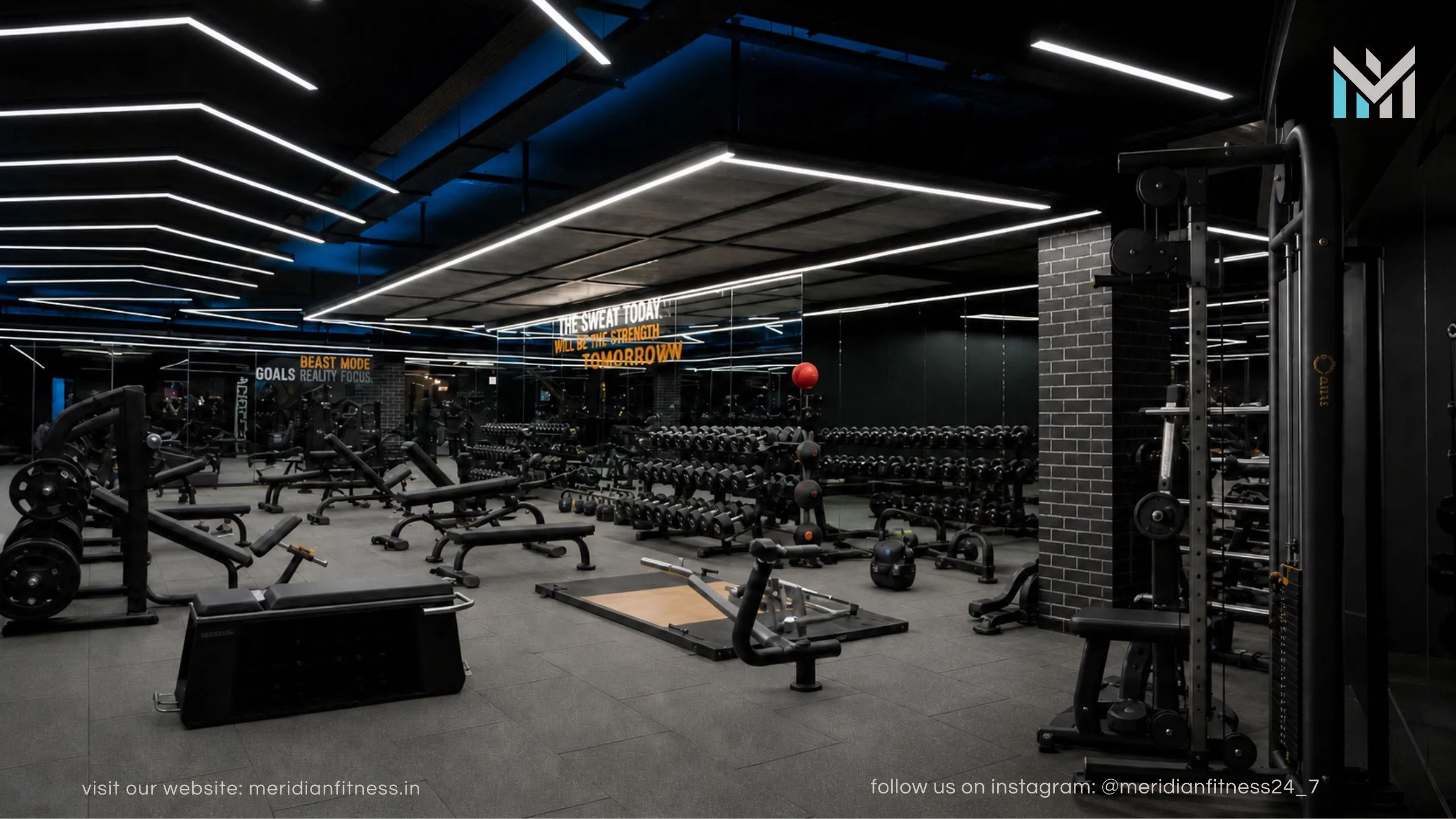
A good training space removes excuses. It has enough equipment to follow your plan without improvising, room to move safely, and a clean floor you don't mind spending an hour on. If you're comparing gyms, our guide on choosing the best gym in South Bangalore covers what to check before you sign up.
The fix: visit your gym at the exact time you plan to train. If you're queuing for equipment or counting minutes until you can leave, it's costing you progress.
3. Are Repetitive Workouts Causing Your Fitness Transformation Plateau?
Very likely, if you've done the same routine for months. Your body gets efficient at familiar work, and efficiency means it stops changing.
Repeating the same session day after day hits you twice:
- Your mind checks out. Workouts start to feel like a chore, and motivation fades.
- Your body adapts. Muscles get efficient at movements they know, so the same workout stops being a real challenge.
Planned variation keeps a fitness transformation moving. A 2017 meta-analysis in Sports Medicine found that periodised resistance training, where load and volume change in planned phases, produced bigger gains in maximal strength than training that stayed the same.
Variation doesn't mean random, though. Changing everything every session makes progress impossible to track. Change one or two things at a time, like weight, reps, tempo or exercise choice.
The fix: add a small progression most weeks, and change exercises or rep ranges every four to six weeks.
4. How Does Skipping Recovery Slow Your Fitness Transformation?
Training creates the stimulus, but your body rebuilds during rest. Cut recovery short and you stay tired instead of getting stronger.
Ask most people for their workout plan and they'll show you. Ask for their recovery plan and you get a blank look. Exercise creates fatigue and small amounts of muscle damage. Sleep, rest days and food are what turn that stress into progress.
Sleep matters more than most people think. In a small controlled study in the Annals of Internal Medicine, 10 overweight adults on the same reduced-calorie diet lost 55% less fat when they slept 5.5 hours a night than when they slept 8.5 hours, and they lost more lean mass instead.
Recovery also means eating enough, especially protein, and not treating every session as a test. A nutritionist in the gym can help you get the food side right.
The fix: put rest days and a fixed bedtime in your calendar, just like a training session. Recovery isn't a reward for hard work. It's part of your fitness transformation.
5. Does Training Alone Make a Fitness Transformation Harder?
For many people, yes. Willpower runs out on bad days. Accountability doesn't.
Late meeting, poor sleep, traffic that won't move. When you train alone, those are the days you skip, and skipped days quietly drag out your fitness transformation.
The research backs this up. A meta-analysis of studies on social influence and exercise found that support from family, friends and coaches, plus a sense of belonging in an exercise group, was linked to better adherence.
That's what group classes, a coach or a regular training partner give you: someone who notices when you don't turn up. If showing up is your weak spot, read how to fix fitness consistency.
The fix: book at least two sessions a week that involve someone else, like a class, a trainer or a friend who expects you there.
6. Is the Scale Hiding Your Fitness Transformation?
Often, yes. A scale shows total body weight. It can't tell fat from muscle, water or last night's dinner.
If you're lifting and eating well, you can lose fat and gain muscle at the same time. Researchers call this body recomposition, and it has been documented in both newer and experienced lifters. On the scale, that can look like nothing is happening, even while your waist shrinks and your lifts go up.
Body weight also swings from day to day with water, salt and carbohydrates. So track a few things together:
- Body composition analysis: estimated fat and muscle, every four to six weeks.
- Measurements and photos: waist, hips and chest, once a month.
- A strength log: are your main lifts going up?
- How you feel: energy, sleep and how your clothes fit.
Our BMI calculator is a quick starting point, but BMI only uses height and weight, so it can't show muscle gain either.
How Long Does a Fitness Transformation Take?
Most people feel stronger within the first few weeks. Visible changes usually take a few months of consistent training, and bigger transformations take longer.
Early strength gains come mostly from your nervous system learning the movements, which is why the first month can feel great even before you see much in the mirror. Muscle growth and fat loss build more slowly.
Your fitness transformation timeline depends on your starting point, your goal, how consistently you train, and how well you sleep and eat. Anyone promising a guaranteed result in a set number of days is selling, not coaching.
How Can You Speed Up Your Fitness Transformation This Month?
Speeding up a fitness jounrey doesn't mean training harder every day. It means removing what's slowing you down. Here's a simple four-week reset:
- Audit your plan. Was it built for you, and has it changed in the last six weeks?
- Add one progression a week. A little more weight, one more rep or one more set.
- Schedule recovery. Rest days and bedtime go in the calendar, not the "if I have time" pile.
- Get accountable. Book a class, a trainer or a training partner for at least two sessions a week.
- Measure properly. Take a body composition reading and measurements now, then again in four weeks.
What Supports a Fitness Transformation at Meridian Fitness JP Nagar?
A basic gym keeps you active. A real fitness transformation needs the whole system: a plan, the right space, variety, recovery, people and tracking. Meridian Fitness JP Nagar is set up around exactly those six fixes. The 22,000 sq. ft. facility has equipment from Precor and Life Fitness, dedicated strength training zones and safety flooring.
- Customised fitness plans: built around your body, goal and lifestyle, not a template.
- Real variety: over 48 group classes a week, including Zumba, CrossFit, Yoga, TRX, MMA, Functional Training, Bollywood Aerobics and Animal Flow.
- Recovery support: yoga sessions, guided stretching and a steam room.
- Progress tracking: body composition analysis, so you see changes in fat and muscle, not just weight.
See how our training programs are structured.
Key Takeaways
- A stalled fitness transformation is usually a signal problem, not a willpower problem.
- People respond very differently to the same program, so personalised plans make sense.
- Your body needs a gradually rising challenge. Planned variation beats doing the same routine forever.
- Recovery is part of training. Short sleep can undermine fat loss even when your diet is on point.
- Social support and group training are linked with better consistency.
- The scale can't see body recomposition. Track body composition, measurements and strength too.
Stuck on a Plateau? Let's Get You Moving Again.
Tell Meridian Fitness JP Nagar your goal and schedule, and our trainers will help you build a plan, a recovery routine and a way to track progress you can actually see.
Book Your Free Trial Follow us on InstagramMore relatable blog posts for you:
- Gym Results: 7 Surprising Reasons You're Not Seeing Them
- Morning or Evening: When Is the Best Time to Workout?
- Personal Trainer Benefits: Everything You Need to Know
Fitness Transformation: Frequently Asked Questions
Why am I not seeing results from my workouts?
The most common reasons are a plan that doesn't fit you, workouts that never get harder, too little sleep and recovery, and tracking only body weight. Fix those first. If nothing changes after a few months of consistent effort, speak with a trainer or doctor.
How long does a fitness transformation take?
Most people feel stronger within a few weeks. Visible changes usually take a few months of consistent training, and larger transformations take longer. Your starting point, goal, sleep, nutrition and consistency all affect the timeline.
Why has my weight loss plateaued?
Your body may be adapting to the same training and calorie intake, or you may be gaining muscle while losing fat. Check body composition and measurements before changing anything. If fat loss has truly stalled, review your plan, food intake and sleep.
Can better recovery improve my fitness results?
Yes. Your body rebuilds between sessions, not during them. One controlled study found dieters lost far less fat when they slept 5.5 hours instead of 8.5 hours. Rest days, sleep and enough protein all support progress.
Do personalised workout plans work better?
They usually fit better, and fit matters. People respond very differently to the same program, so a plan that starts at your level and adjusts as you progress is more likely to keep you improving than a one-size-fits-all routine.
How often should I track my fitness progress?
Log your workouts every session, take measurements and photos monthly, and check body composition every four to six weeks. Daily weigh-ins swing with water and food, so look at weekly trends rather than single numbers.
✓ Reviewed by Meridian Fitness's certified training team, JP Nagar.
This article is for general information and isn't medical advice. If you have a health condition or injury, speak with a doctor before changing your exercise or diet routine.
