


Quick Answer
Your gym environment has a real effect on how often you train and how hard you push. A clear layout, good light and air, the right music, coaches on the floor, a friendly community and easy progress tracking all reduce friction, so the gym feels like somewhere you want to be rather than somewhere you have to go.
Most people blame willpower when they stop going to the gym. Yet the gym environment itself often decides whether you walk in with energy or talk yourself out of it in the car park. Layout, lighting, music, the people around you and the coaches on the floor all nudge your behaviour, usually without you noticing.
This guide looks at the design side of the story: which parts of a gym help you train, which ones quietly push you away, and what to notice when you walk into a new one.
Does the Gym Environment Really Affect Motivation?
Yes. Your surroundings change how easy, pleasant and productive a session feels, and that shapes whether you come back.
Think of every visit as a small cost. Traffic, a queue for the bench, a stuffy room or a floor where nobody helps each add a little to that cost. Good music, a familiar coach, a class full of friendly faces and a visible sign of progress take a little away. When the balance tips the wrong way often enough, people stop going, even if their motivation was strong on day one.
Motivation and habit-building on the personal side are a topic of their own, covered in our guide on how to get motivated to work out. Here, the focus is on what the gym itself can do.
Six Ways a Gym Environment Shapes Your Workouts
Here's a quick overview, followed by what the evidence says about each one.
| Design element | How it affects you | What to look for |
|---|---|---|
| 1. Layout | Less waiting and wandering means less friction | Separate zones, logical equipment flow |
| 2. Light and space | Bright, open rooms feel energising rather than cramped | High ceilings, good lighting, fresh air |
| 3. Music | Hard work feels easier and more enjoyable | Upbeat tracks at a sensible volume |
| 4. Visible coaches | Help is close, so you train with more confidence | Certified trainers on the floor, not at the desk |
| 5. Community | People notice when you don't turn up | Busy class timetable, friendly regulars |
| 6. Feedback | Seeing progress keeps you going | Body composition checks, workout tracking |
1. A Layout That Removes Friction
Every small obstacle chips away at motivation. Hunting for a free bench, squeezing past a cardio row or waiting for the only cable machine turns a focused session into a frustrating one. Dedicated zones for cardio, weights and classes keep traffic flowing, so you spend your hour training rather than waiting.
2. Light and Space That Lift Your Energy
Think about how a dim, cramped basement feels compared with a bright, open floor. Although research on gym lighting specifically is limited, most people simply feel more alert and comfortable in well-lit, well-ventilated spaces. Fresh air matters too, particularly during Bangalore's warmer months.
3. Music That Makes Hard Work Feel Easier
Music is one of the best-studied parts of any gym environment. A large meta-analysis in Psychological Bulletin, covering more than 130 studies, found that listening to music during exercise improved mood, reduced perceived effort and boosted physical performance playlist right gives you a free performance boost.
4. Coaches You Can Actually See
Knowing help is a few steps away changes how you train. In a 12-week study, men whose resistance training was directly supervised lifted heavier loads and gained more strength than those who trained unsupervised. For beginners, visible trainers also make the floor feel far less intimidating. If walking in still makes you nervous, our guide on overcoming gym anxiety can help.
5. A Community That Expects You
People are powerful cues. In a 12-week study of 69 medical students, those who joined group fitness classes reported 26% lower stress, whereas students who exercised alone saw no significant change, despite working out for longer. Beyond the mood boost, a class or training partner adds gentle accountability: somebody notices when you're missing.
6. Feedback You Can Measure
Progress is motivating, but only if you can see it. Weight on the scale often moves slowly or not at all, especially when you're building muscle. Regular body composition checks and a simple workout log show the changes the mirror misses, which gives you a reason to keep coming back.
What Makes a Gym Environment Feel Intimidating?
Even a well-equipped gym can push people away. Common culprits include:
- Overcrowding at peak hours, with long queues for key equipment.
- No guidance, leaving newcomers to guess how machines work.
- A cliquey atmosphere where regulars dominate certain areas.
- Confusing layouts that make it hard to know where to start.
The fix is usually simple: an induction for new members, trainers who walk the floor, and enough space that nobody feels in the way.
How Do You Judge a Gym Environment on Your First Visit?
Go at the hour you'd normally train and spend ten minutes just noticing how the place feels, before anyone starts selling.
- Watch the flow. Can people move between zones easily, or is everyone weaving around each other?
- Check the queues. Count how many people are waiting for racks, benches or cardio machines.
- Feel the air and light. Is it bright and fresh, or dim and stale?
- Listen to the music. Energising at a sensible volume, or so loud you can't hear a coach?
- Spot the coaches. Are trainers walking the floor and correcting form, or sitting at the desk?
- Read the room. Do members look relaxed and friendly, or does one area feel claimed by a clique?
For the practical side of choosing a gym, like hygiene, equipment upkeep and membership terms, use our checklist on what to look for in a quality gym.
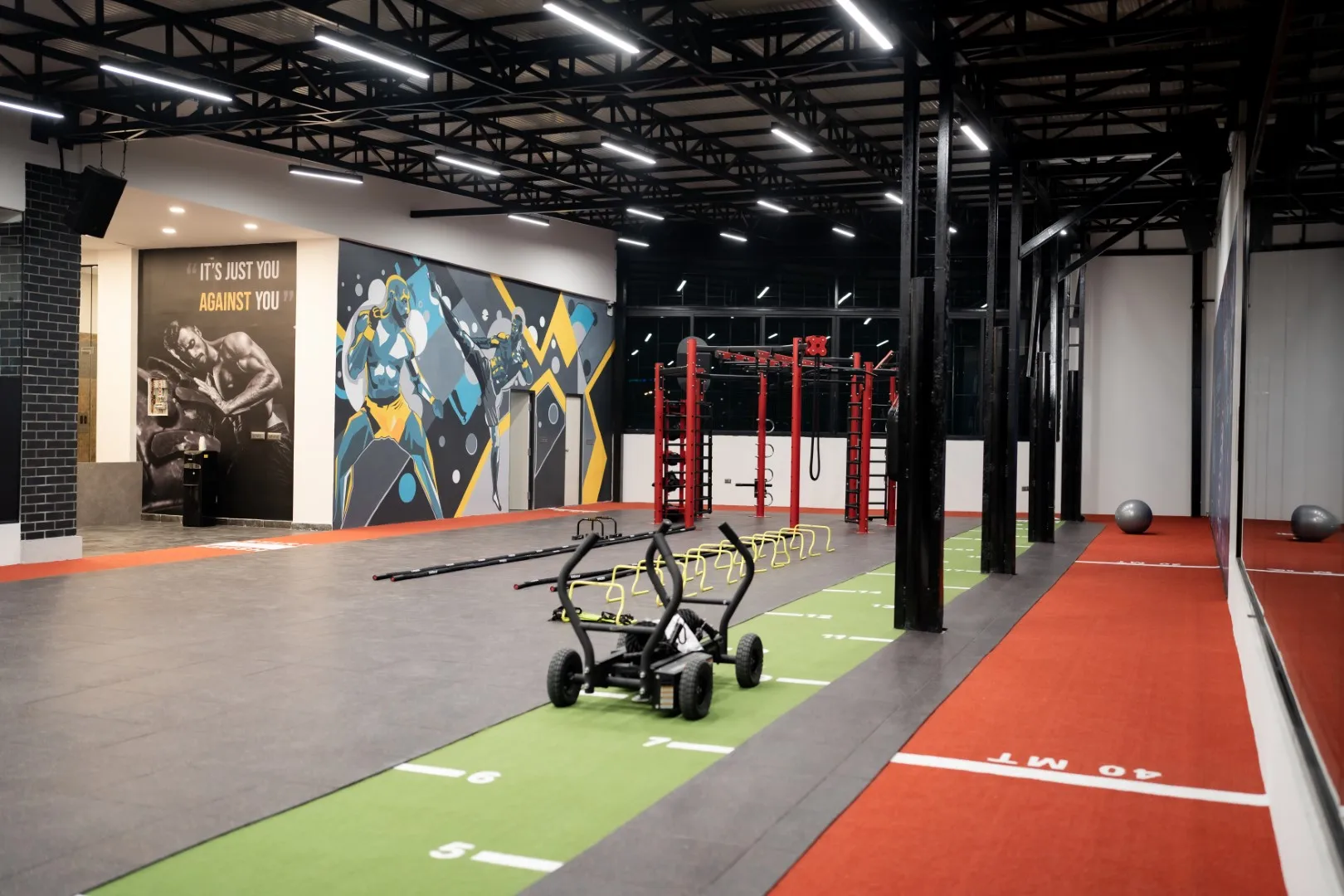
Inside the Gym Environment at Meridian Fitness JP Nagar
Meridian Fitness JP Nagar was designed around the principles above. Here's what that looks like on the floor:
- Room to move: 22,000 sq. ft. with dedicated areas for cardio, weights, CrossFit and calisthenics.
- Studios with their own energy: spin, yoga, and boxing and MMA studios.
- Coaches on the floor: certified trainers, including two female trainers.
- Community: 48+ group classes a week, from Zumba to Animal Flow.
- Visible progress: body composition analysis so you can track fat and muscle.
- Hours that fit real schedules: 5 am to 11 pm Monday to Saturday, and 8 am to 8 pm on Sunday.
Take a closer look at our gym amenities and training programs. Comparing options nearby? Read about the mistakes to avoid when choosing the best gym in South Bangalore.
Key Takeaways
- Your gym environment influences how often you train, not just how you feel there.
- Small frictions like queues, crowding and stale air add up, and they quietly push people away.
- Music reduces perceived effort, and supervised training leads to heavier, more productive sessions.
- Group classes are linked to lower stress and better accountability.
- Judge a gym environment at your usual training hour, and watch the flow, queues, light, music and coaches.
Feel the Difference the Right Space Makes.
Visit Meridian Fitness JP Nagar at your usual training time, try a session or a class, and see how it feels to train in a space designed around you.
Book Your Free Trial Explore Our AmenitiesMore relatable blog posts for you:
- What to Look for in a Quality Gym: The 8-Point Checklist
- How to Get Motivated to Work Out (And Actually Keep Going)
- Stop Gym Fear: How to Overcome Gym Anxiety
Gym Environment: Frequently Asked Questions
Does the gym environment affect motivation?
Yes. Layout, music, coaching, community and cleanliness all affect how easy and enjoyable training feels. When the gym reduces friction and adds small rewards, you're more likely to keep showing up.
What should I look for in a gym's atmosphere?
Visit at your usual training time and check how easily people move around, how long the queues are, whether the space is bright and well ventilated, whether the music is energising but not deafening, and whether trainers are on the floor helping members.
Does music really help during workouts?
Absolutely. A meta-analysis of more than 130 studies found that music during exercise improves mood, lowers perceived effort and modestly boosts performance. Upbeat songs with a strong rhythm tend to work best.
Why do I feel uncomfortable at the gym?
It's very common, especially when you're new. Crowds, unfamiliar equipment and no guidance all add to it. An induction, a trainer-led first session or a beginner-friendly class can make the space feel familiar quickly.
Is a bigger gym always better?
Not automatically. Size helps when it means less crowding and dedicated zones, but cleanliness, coaching, community and convenience matter just as much. Visit at your usual time to judge how it actually feels.
Can a trainer help if I struggle with motivation?
Often, yes. A trainer gives you a clear plan, tracks your progress and expects you at each session. That structure and accountability often matter more than motivation on any given day.
✓ Reviewed by Meridian Fitness's certified training team, JP Nagar.
This article is for general information. If you have a health condition, speak with a doctor before starting a new exercise routine.
